Retaining Walls & Concrete Masonry
Control erosion, create level outdoor spaces, and add architectural interest to your property with custom retaining walls.
Why Retaining Walls Are Important
Retaining walls solve a variety of landscape challenges. If your property has sloped terrain, a retaining wall can create level areas for patios, gardens, driveways, or lawns. Without proper support, sloped soil can erode, wash away during heavy rain, or slide downhill, damaging your property and creating safety hazards. A well-built retaining wall holds the soil in place and prevents erosion.
Retaining walls also add functional outdoor space. By terracing a slope, you can transform unusable hillside into multiple usable areas. This is especially valuable in Norwich, CT where many properties have natural slopes and uneven terrain. A retaining wall allows you to maximize your property and create the outdoor living areas you want.
Beyond function, retaining walls add visual appeal and define different zones in your landscape. They create focal points, add dimension, and can be designed to complement your home architecture. Whether you need a simple wall to hold back a small slope or a complex system of terraced walls for a large project, we design and build retaining walls that are both beautiful and structurally sound.
Types of Retaining Walls and Masonry
Poured Concrete Retaining Walls
Poured concrete retaining walls offer maximum strength and durability. We excavate and prepare the site, build forms to shape the wall, install steel reinforcement, and pour high-strength concrete. Poured walls can be finished smooth, textured, or covered with decorative stone or brick veneer. This type of wall is ideal for taller walls, heavy soil loads, or areas where maximum structural integrity is needed.
We include proper drainage systems behind poured walls to prevent water buildup and pressure that can cause damage. Weep holes, drainage pipes, and gravel backfill ensure water can escape rather than pushing against the wall. This attention to drainage is critical for long-term performance and preventing costly failures.
Concrete Block and Masonry Walls
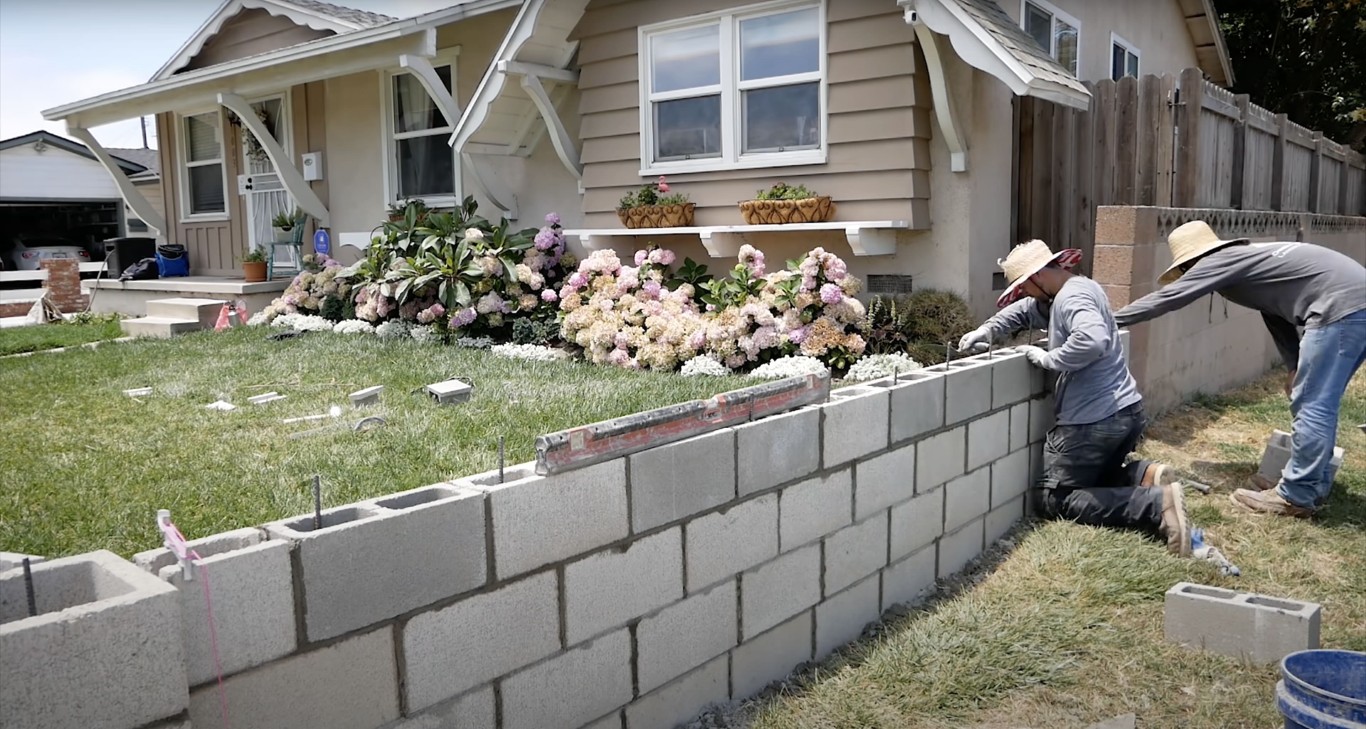
Concrete block walls are built using individual masonry units that are stacked and mortared together. These walls can be reinforced with steel and filled with concrete for added strength. Block walls offer design flexibility and can be finished with stucco, stone veneer, or left exposed for an industrial look. They are cost-effective for medium-height walls and work well in both residential and commercial settings.
We also build walls using natural stone, brick, or decorative concrete blocks. These materials create a traditional, upscale appearance that enhances your landscape. Each type of masonry has its own aesthetic and performance characteristics, and we help you choose the right material for your project based on your budget, design preferences, and structural requirements.
Segmental Retaining Wall Systems
Segmental retaining walls use interlocking concrete blocks that are dry-stacked without mortar. These systems are engineered to handle specific loads and heights, making them a popular choice for residential landscapes. They come in a variety of colors, textures, and styles that mimic natural stone or offer modern, clean lines.
Segmental walls are relatively quick to install and offer excellent durability. They can accommodate curves and steps, making them versatile for different landscape designs. Proper base preparation and correct installation techniques are essential for segmental walls to perform as designed, and our experience ensures your wall is built to last.
Our Retaining Wall Installation Process
Building a retaining wall is a specialized skill that requires knowledge of soil mechanics, drainage, and structural engineering. Here is how NWC Norwich Concrete approaches every retaining wall project:
- Site evaluation to assess soil conditions, slope, and drainage needs
- Engineering and design to determine wall height, reinforcement, and drainage requirements
- Excavation and base preparation with compacted gravel for stability
- Installation of drainage systems to manage water and prevent pressure buildup
- Construction of the wall using proper techniques and quality materials
- Backfilling with appropriate materials to support the wall and improve drainage
- Final grading and cleanup to integrate the wall into your landscape
We follow manufacturer specifications for segmental wall systems and engineering guidelines for poured and block walls. For walls over a certain height, local building codes may require engineered plans and inspections. We handle all necessary permits and coordinate with engineers and inspectors to ensure your wall meets all legal and safety requirements.
After installation, we provide guidance on maintenance and care. Most retaining walls require little upkeep, but periodic inspection and minor repairs can extend their life. If you notice any signs of movement, cracking, or drainage issues, we can assess the situation and recommend repairs to prevent more serious problems.